Game Theory in AI
Game Theory in AI
By Azfar Uzair, Aashay More, Pranav Ratnaparkhi, Swetank Raj, Prathamesh Yadav
Introduction:
Games have been one of the most visible areas of
progress in the AI space in the last few years. Chess, Jeopardy, GO and, very
recently, Poker is some of the games that have been mastered by AI systems
using breakthrough technologies. From that viewpoint, the success of AI seems
to be tied to the progress of game theory.[1]
While
games are the most obvious expression of game theory, they are far from the
only domain in which those principles are used. From that viewpoint, the
integration of game theory and AI can have an impact on a variety of different
domains. Most scenarios involving several "participants" working
together or competing to complete a job may be gamified and enhanced utilizing
AI approaches.[1]
Types
of games:
Symmetric
vs. Asymmetric.
The
symmetry of a game is one of the most basic categories.
A
symmetric game is one in which each participant has identical aims and the
outcomes are completely determined by the techniques used.
Chess
is one of the most well-known symmetric games.
Because
participants typically have distinct and even opposing aims, many of the
scenarios we witnessed in the actual world lack the mathematical elegance of
symmetry.
Business
negotiation is an asymmetric game in which each participant has distinct aims
and analyses the outcomes from a different viewpoint (ex: winning a contract
vs. minimizing an investment).[2]

Fig 1. Example of Symmetric: Checkers.
(Image
Source: https://images.unsplash.com/photo-1551198581-aec5c1556d7c?ixlib=rb-1.2.1&ixid=MnwxMjA3fDB8MHxzZWFyY2h8Mnx8Y2hlY2tlcnN8ZW58MHx8MHx8&w=1000&q=80)

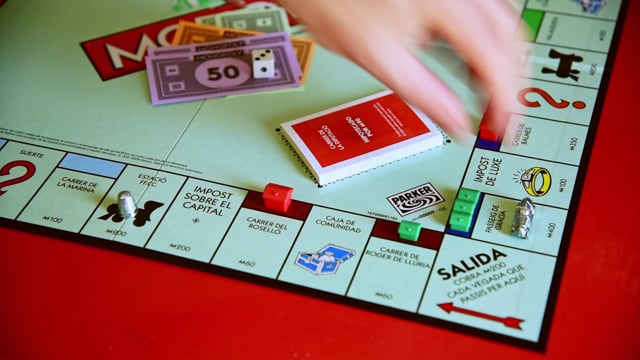
(Image Source: https://i.vimeocdn.com/video/912647937-dcd7547d62a00baaba5672c506edfa45e2f37c15b325aecc7a4f49ced1207031-d_640x360.jpg)
Perfect
vs. Imperfect Information
Another
key way to categorise games is by the sort of data offered. A perfect
information game is one in which each player can observe the moves of the other
player. Chess is an example of a perfect information game once again. Many
current interactions take place in contexts where each player's moves are
hidden from the other players, which game theory describes as incomplete
information games. Imperfect information games may be found everywhere, from
card games like poker to self-driving automobile scenarios.[2]

Fig
3. Example of a Perfect Information game: Chess.
(Image
Source: https://images.unsplash.com/photo-1523875194681-bedd468c58bf?ixlib=rb-1.2.1&ixid=MnwxMjA3fDB8MHxzZWFyY2h8MXx8Y2hlc3N8ZW58MHx8MHx8&w=1000&q=80)

(Image
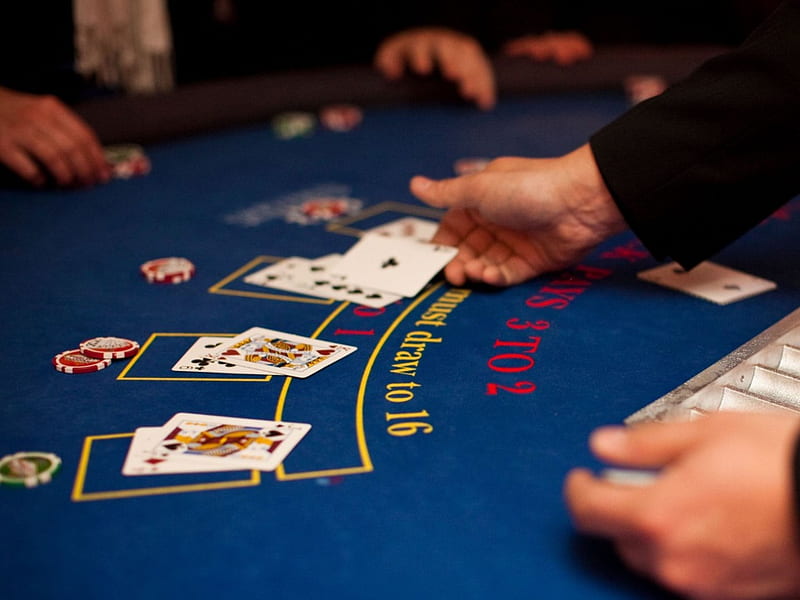
Source: https://w0.peakpx.com/wallpaper/240/226/HD-wallpaper-blackjack-card-games-playing-cards-poker.jpg)
Cooperative
vs. Non-Cooperative
A
cooperative gaming setting is one in which the various players can form teams to
optimize the outcome. Negotiations are frequently fashioned after cooperative
games. Non-cooperative situations are those in which participants are not
allowed to establish coalitions. Non-cooperative games are reflected by wars.
[2]

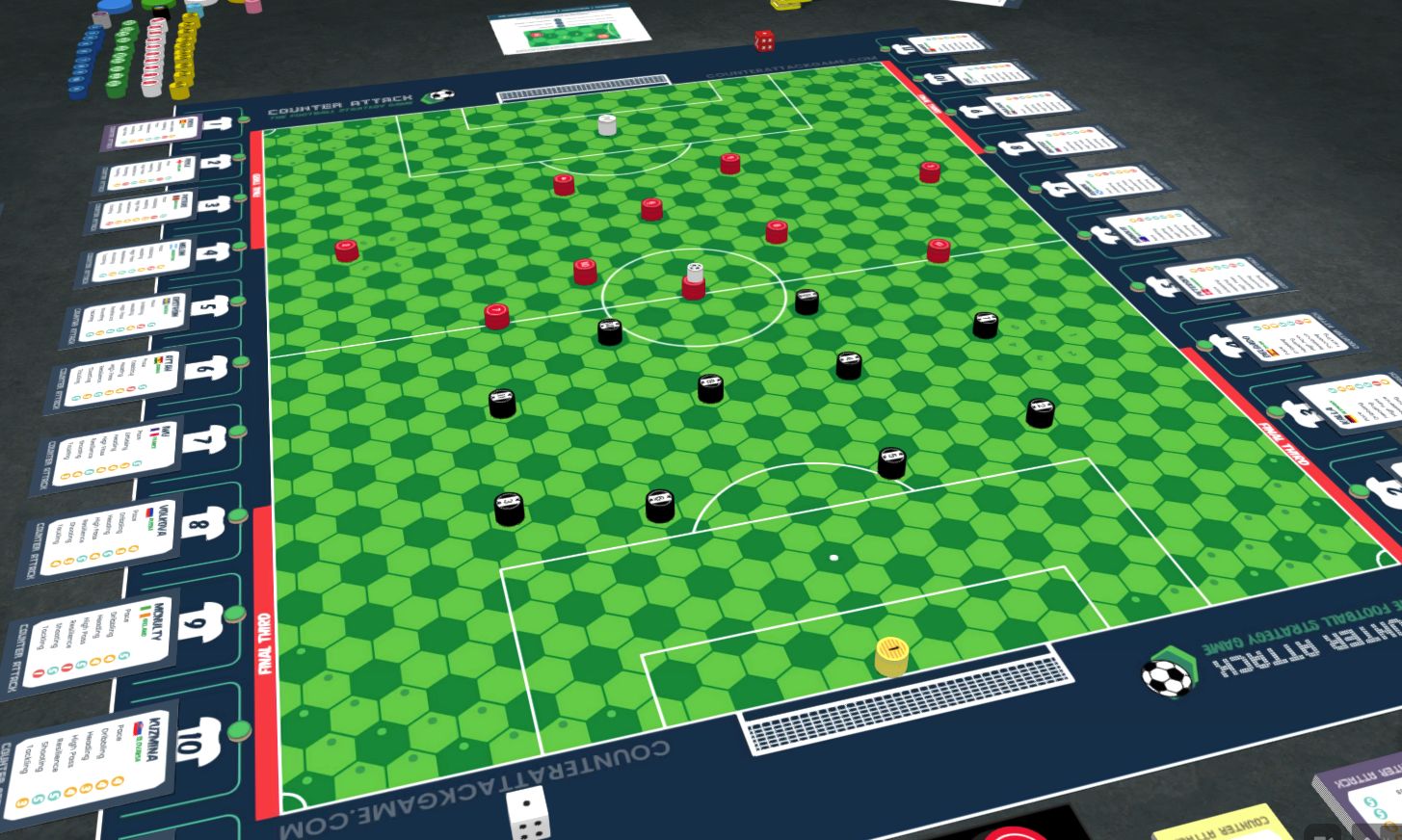
Fig
5. Example of Cooperative games: Football
(Image
Source: https://cdn.tabletopia.com/static/files/007/807/gbmcnf5xxwcmiigcytodc4.png?maxwidth=1600&maxheight=900&format=jpg&quality=80)

Fig
6. Example of Non-cooperative game: Battleship board game
(Image
Source: https://i.ytimg.com/vi/4gHJlYLomrs/maxresdefault.jpg)
Simultaneous
vs. Sequential
A
sequential game takes place in a setting where each participant is aware of the
previous activities of the other players. The majority of board games are sequential.
Simultaneous games are settings in which both players can do actions at the
same time. Simultaneous games include things like stock trading.[2]

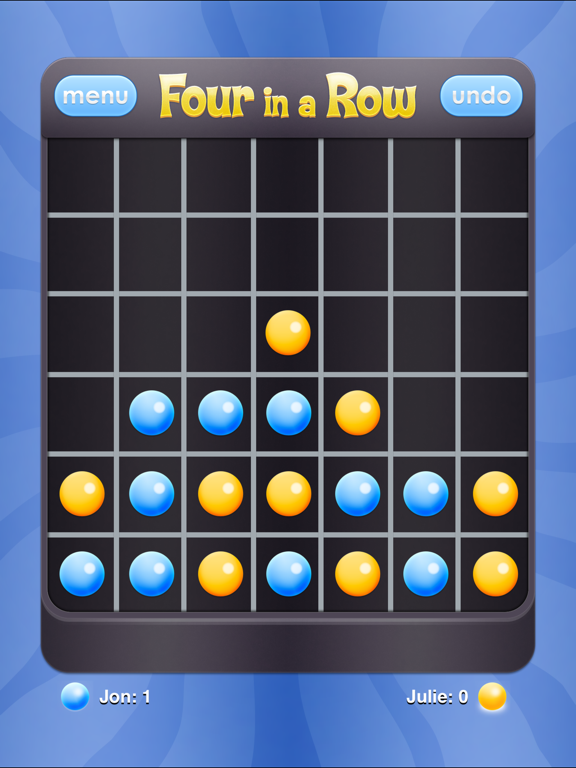
Fig
7. Example of Simultaneous games: Four in a row.
(Image
Source: https://is5-ssl.mzstatic.com/image/thumb/Purple118/v4/aa/a5/6b/aaa56bb2-e570-4a5d-01b8-0a6dbf62d57f/pr_source.png/576x768bb.png)
Zero-Sum
vs. Non-Zero-Sum
A
zero-sum game is a situation in which one player's gains always result in
losses for the other participants. Zero-sum games include board games, for
example. In situations when numerous players might gain from the actions of one
player, non-zero-sum games are common. A non-zero-sum game is an economic
transaction in which numerous participants work to enhance the size of the
market.[2]
Novel Ideas in Game Theory which might be Influencing Machine
Learning:
Multi-agent AI systems are one of the maximum charming
regions of studies withinside the AI ecosystem. Recent improvements in regions including multi-agent structures are pushing the limits of game concept counting on a number of the maximum state-of-the-art thoughts withinside the field. Here are a few examples of game concept sub-disciplines that might be very found in present-day device
learning.
Mean Field Games
Mean Field-Games(MFG) is a quite new region in the game theory space. The MFG theory turned
into simply evolved in 2006 as a part of a chain of impartial papers posted with the aid of using Minyi
Huang, Roland Malhamé, and Peter Caines in Montreal, and with the aid of using Jean-Michel Lasry and Fields medalist Pierre-Louis Lions in
Paris. Conceptually, MFG accommodates techniques and strategies to observe differential video games with a huge population of rational players. These marketers have possibilities now no longer best approximately their
state (e.g., wealth, capital) however additionally at the distribution of the
final people withinside the populace. MFG theory research generalized Nash equilibria for those systems.
A conventional instance of MFG is how organizations of fish in an education swim withinside the identical path and
in a coordinated matter. Theoretically, this phenomenon is tough to give an explanation for however it has its roots in the truth that a fish reacts to the conduct of the nearest group. More specifically, every fish does now no longer care approximately every one of the opposite fishes for my part however, rather, it cares approximately how the fishes
nearby, as a mass, globally move. If we translate that into mathematical terms,
the response of fishes to the mass is defined by the Hamilton-Jacobi-Bellman equation. On the opposite hand, the aggregation of the movements of the fishes which
determines the movement of the mass corresponds to the Fokker-Planck-Kolmogorov
equation. The mean-discipline game theory is the mixture of those equations.
Stochastic Games
Stochastic video games date again to the Fifties and had been delivered with the
aid of using Nobel-prize winner economist Lloyd Shapley. Conceptually, stochastic video games are performed with the aid of using a finite wide variety of gamers on a finite country space, and in every country, every participant chooses one in all
finitely many movements; the ensuing
profile of movements determines praise for every participant and a chance distribution on successor states.
A conventional shape of stochastic video games is the dining
philosophers hassle wherein there are n + 1 philosophers (n ≥ 1)
sitting at a spherical desk with a bowl of rice withinside the middle. Between any philosophers who take a seat down after every different lie a chopstick, which may be accessed with the aid of using each of them. Since the desk is spherical, there are as many
chopsticks as there are philosophers; To consume from the bowl, a logician desires to accumulate each of the chopsticks he has to get entry to. Hence, if one logician eats, then his pals can't consume at an identical time. The lifestyle of a logician is alternatively easy and includes wondering and
eating; to survive, a logician desires to suppose and consume once more and once more. The project is to lay out a protocol that lets all the philosophers survive.

Fig 8. Dining
philosophers problem.
(Image
Source: https://www.thecrazyprogrammer.com/wp-content/uploads/2017/06/Dining-Philosophers-Problem.png)
Inverse
Game Theory
In
many circumstances, the issue is not to maximise a game participant's strategy,
but to construct a game around logical participant behaviour. This is where
inverse game theory comes in. Auctions are one of the most common applications
of inverse game theory.
The
rise of AI and multi-agent systems has sparked a boom in game theory. The ideas
of game theory, which were developed by computer science giants such as Alan
Turing and John Von Neumann, are now at the heart of some of the world's most
intelligent systems, and current advances in AI are also helping to progress
game theory research.[2]
Evolutionary Games
The
Darwinian idea of evolution is the basis for Evolutionary Game Theory (EGT).
The formalisation of competitions studied as strategies and the mathematical
criteria that may be used to forecast the results of competing strategies by
John Maynard Smith and George R. Price date back to 1973. EGT is the
application of game theory principles to situations in which a population of
agents with different strategies interact over time to generate a stable
solution through a selection and duplication process.[3]
The
central idea of EGT is that many behaviours require the interaction of numerous
individuals in a population, and the success of any one of these individuals is
determined by how its strategy interacts with the strategies of others. While the
traditional game theory has focused on static tactics or methods that do not
vary over time, the evolutionary game theory focuses on how strategies develop
over time and which types of dynamic strategies are most effective in this
evolutionary process.[3]
The
Hawk Dove Game, which models a fight between a hawk and a dove over a shared
resource, is a famous example of EGT. Each competitor in the game uses one of
the two techniques listed below:
- Hawk: Start acting aggressively and don't stop until you're hurt or your opponent backs down.
- Dove: If an opponent engages in hostile behaviour, retreat quickly.
If
we suppose that (1) anytime two individuals engage in aggressive behaviour,
conflict occurs, and both persons are equally likely to be wounded, and (2) the
cost of the conflict decreases individual fitness by a constant amount, The
fitness payoffs for the Hawk-Dove game can be summarised as follows: C, (3)
when a Hawk meets a Dove, the Dove immediately retreats and the Hawk obtains
the resource, and (4) when two Doves meet, the resource is shared equally
between them, the fitness payoffs for the Hawk-Dove game can be summarised as
in fig 10:

References:
1. A. R. Karlin and Y. Peres, Game theory, alive. Providence, RI: American Mathematical Society, 2017.
2. M. D. Davis and O. Morgenstern, Game theory: A nontechnical introduction. Mineola (New York): Dover, 2013.
3. N. Nisan, Algorithmic game theory. Cambridge: Cambridge Univ. Press, 2013.
4. A crash course in game theory for Machine Learning: Classic and new ideas. KDnuggets. (n.d.). Retrieved January 7, 2022, from https://www.kdnuggets.com/2020/03/crash-course-game-theory-machine-learning.html



Good work
ReplyDeleteGreat work!
ReplyDeleteInformative !!
ReplyDeleteInformative!
ReplyDeleteThis was informative
ReplyDeleteNice , Informative
ReplyDeleteNice blog 👍
ReplyDeleteNice Blog
ReplyDeleteWell explained
ReplyDelete